The short answer
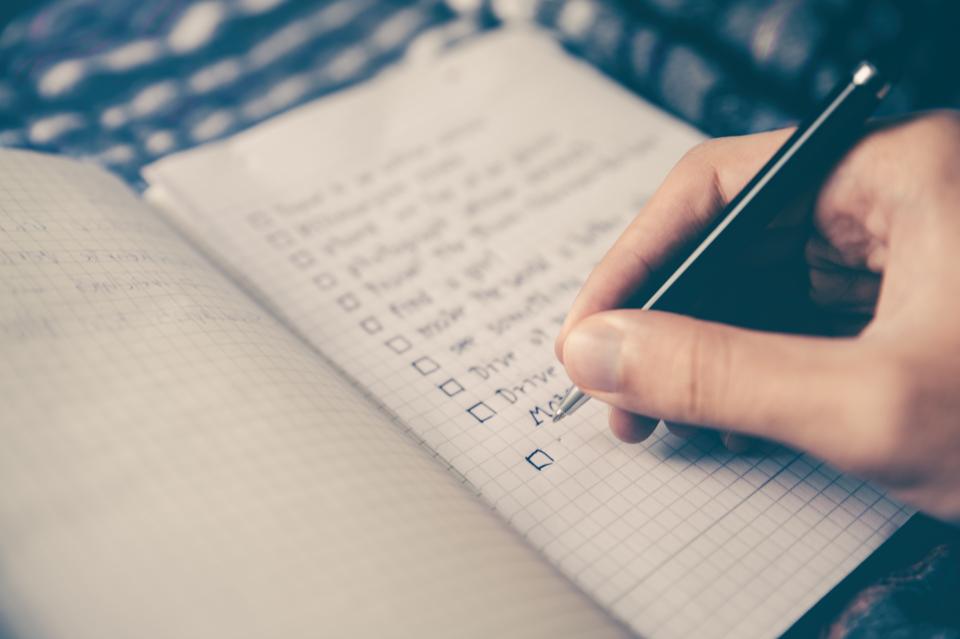
A habit tracker is a simple tool for recording, day by day, whether you did a habit. Most of the time it’s a grid of squares on paper or in an app like Everlo. It makes progress visible, and research shows that people who regularly monitor their progress are more likely to reach their goals.
Maybe you’ve seen one on TikTok, in someone’s bullet journal or in an app store list. A habit tracker sounds like self-optimisation with spreadsheets. In reality it’s about the simplest tool there is: a list with squares.
The one-sentence definition
A habit tracker is an overview where you mark, every day, whether you did a particular habit. Say you want to read ten pages every evening. Your tracker has a row called “Reading” and a square for each day. When you’ve read, you fill it in. After a month, you can see at a glance how often you managed it.
What a habit tracker looks like
Almost all of them follow the same idea: habits on one axis, days on the other.
| Habit | Mon | Tue | Wed | Thu | Fri | Sat | Sun |
|---|---|---|---|---|---|---|---|
| Drink water | ✓ | ✓ | ✓ | ✓ | ✓ | ✓ | |
| Read 10 pages | ✓ | ✓ | ✓ | ✓ | ✓ | ||
| 20-minute walk | ✓ | ✓ | ✓ | ✓ |
That’s it. The magic isn’t in the tool, it’s in the repetition. After a few weeks a pattern appears that tells you more about yourself than any good intention.
The main types
Paper
A sheet on the fridge, a page in your bullet journal, a printed template. Free, mindful and screen-free, but easy to forget when you’re away from home. You can grab our free printable template.
Apps
Apps remind you, calculate streaks and success rates for you and are always in your pocket. Well-known examples include Habitica, Loop, Streaks, Habitify and Everlo. We compare them in The best habit tracker apps.
Spreadsheets and templates
Excel, Google Sheets or Notion. Flexible, but checking things off every day is usually more fiddly than in a dedicated app.
Why ticking boxes works
It sounds too simple to matter, but it’s well researched. A large 2016 review of 138 experiments with almost 20,000 participants found that people who regularly monitor their progress are more likely to reach their goals. The effect was strongest when progress was physically recorded.
- Honesty: we tend to overestimate how often we do things. A grid can’t be talked up.
- An instant reward: filling in the square feels good long before the habit itself pays off.
- The chain: after a few days in a row, you don’t want to break the streak.
How to start in five minutes
- Pick one habit. Just one, the one that would improve your life most.
- Make it small. Small enough to manage on a bad day. Two pages instead of a chapter.
- Decide when. For example “after brushing my teeth”.
- Set it up on paper or in an app. In Everlo it takes about 20 seconds.
- Check it off today. Not tomorrow, not on Monday. The first square matters most.
Expect it to take a while before the habit feels automatic, closer to two months than the famous 21 days. We explain why in How long does it take to form a habit?
A habit tracker that stays out of the way
Everlo is a minimal habit tracker that runs in your browser. Add habits, check them off with one tap and see a grid of up to a year under each one. It’s completely free, no matter how many habits you add. No points, no levels, no distractions.
Frequently asked questions
What do you put in a habit tracker?
Things you want to do regularly, such as drinking water, reading, exercise or going to bed earlier. Each day you mark whether you did them.
Is a habit tracker free?
On paper, always. Many apps have a free version too. Everlo is completely free, with as many habits as you like.
What’s the difference between a habit tracker and a to-do list?
A to-do list holds one-off tasks that are done once completed. A habit tracker holds repeated actions, and its value comes from the repetition over many days.